
Frost & Flame: King of Avalon
FunPlus International AGStrategy
4.365.37K Reviews
- Version
- 24.6.25
- Installs
- 50.00M
- Age Rating
- Everyone 10+
Screenshots
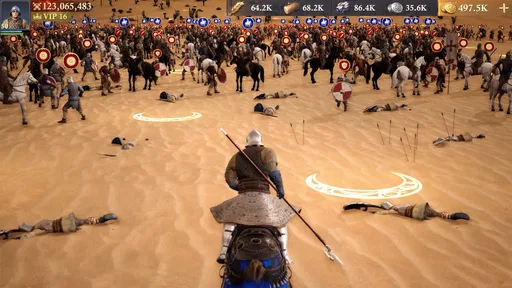
Our Review of Frost & Flame: King of Avalon
 Analysis by Appyee
I approached Frost & Flame: King of Avalon as a strategy game to dip into between other tasks, and its appeal is clear: it gives you a kingdom to shape, a dragon to develop, and decisions that reach beyond your own castle. The fantasy setting supplies a strong mood, but the lasting draw is the push and pull between building at your own pace and taking part in a world where other players have their own plans.
That mix suits people who enjoy gradual progress, long-term goals, and cooperation with a group. It is less suited to anyone looking for a self-contained story, a quick round with a definite finish, or strategy that depends mainly on direct, moment-to-moment control. I found it most rewarding when I treated it as a world to check in on regularly, rather than a game that needed to occupy my full attention every time I opened it.
The Realm Awaits: First Impressions
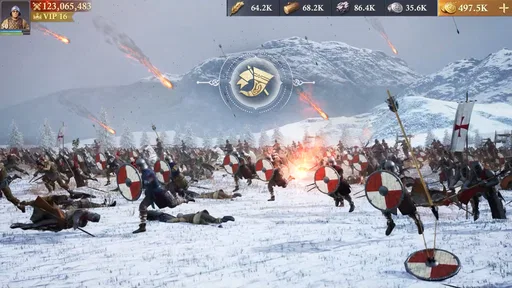
From the moment you open Frost & Flame: King of Avalon, you're greeted with a visually stunning environment. The graphics are top-notch, making you feel like you’ve stepped right into a medieval painting. The attention to detail is pretty amazing, with lush landscapes, imposing castles, and fearsome dragons. Seriously, who doesn't love a good dragon?
A fantasy style built around a working kingdom
The art direction gives the game an immediately readable identity: stone fortifications, rugged land, and dragons make the setting feel recognizably medieval fantasy without asking you to learn a complicated fictional history first. I like that the scenery has a practical role as well as an atmospheric one. Your castle is not merely a backdrop; it makes the idea of expanding a realm feel concrete, and the dragon ties the more mythical side of the world to the decisions you make about your forces.
There is a useful distinction between this presentation and a story-led fantasy adventure. The mood comes mainly from the place you manage and the activity happening around it, rather than from a tightly directed plot that carries you from one dramatic scene to the next. If you want a fantasy world to inhabit over time, that can be appealing. If you want authored characters and a clear narrative ending, a role-playing game is likely to fit better.
Sound and the pace of checking in
The game’s atmosphere is designed to support repeated visits more than a single uninterrupted session. I find that a natural match for kingdom management: I can decide what needs attention, make a few choices, and return later instead of expecting every visit to contain a complete battle story. The sound and visual presentation work best as part of that overall medieval tone, helping the world feel cohesive while the actual rhythm remains shaped by upgrading, preparing, and responding to activity.
That pace is a strength only if it matches your habits. A short check-in can feel satisfying when you have a specific goal, such as deciding which building deserves resources next. It can feel less satisfying when you want immediate action and the next meaningful step depends on waiting or on longer-term progress. I would not pick it as a substitute for a fast tactical game; I would choose it when I want a strategy world that can sit alongside a busy day.
Gameplay Mechanics: Build, Battle, and Befriend
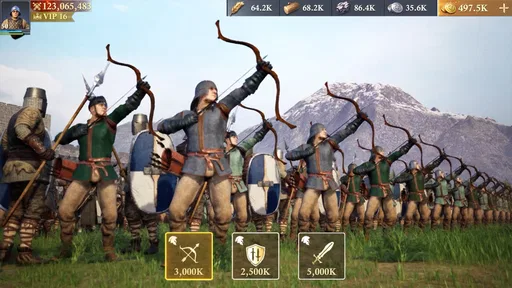
The core of the game revolves around building your kingdom, training your army, and battling it out with other players. The building mechanics are fairly straightforward. You need to gather resources like wood, food, and iron to expand your empire. It’s all about strategy here, folks! Deciding what to upgrade and when can make or break your kingdom.
For a new player, the most useful habit is to make each visit answer one question: what is currently holding back my next improvement? If it is a resource, focus your attention there; if it is an upgrade, avoid spreading your effort across several unrelated goals. I also recommend thinking about what you can actually do in your next session before committing to a plan. A kingdom that looks impressive on paper is less useful than a steady sequence of improvements you can support with the time you have.
This is also where the game differs from a traditional turn-based strategy title. Rather than concentrating all of its decisions into a compact match, it asks you to invest in a growing base and a military presence over time. That creates a sense of ownership, but it also means that progress can feel gradual. Players who want a fresh, neatly balanced contest every time they sit down may be happier with a match-based strategy game, where each session starts with the same broad footing.
Combat choices and the value of allies
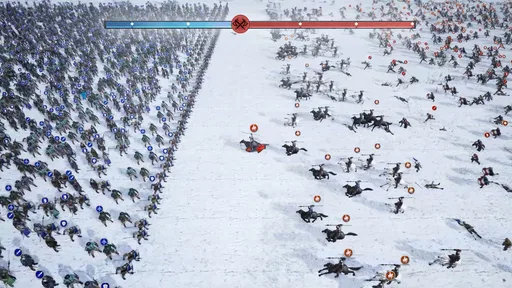
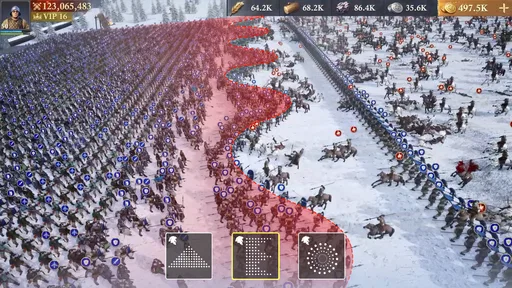
Combat is where things get really exciting. You can engage in battles with other players or hunt down monsters in the wild. The PvP element is a thrilling experience, testing your strategic prowess against others. And let's not forget the alliances. Forming alliances can be a game-changer, offering protection and resources. It's like having a medieval squad that’s got your back.
The social side is not just decoration around the strategy. An alliance can affect how secure and connected your experience feels, so it is worth considering whether you want a game that involves communication and shared priorities. If you prefer to play entirely alone, you can still enjoy personal kingdom-building, but you will be setting aside one of the parts that most clearly separates this game from a solitary strategy experience. I would look for a group whose pace and expectations suit me, rather than joining simply because an alliance is available.
For a realistic everyday routine, imagine opening the game during a break, checking what your kingdom needs, making one or two useful decisions, and then returning later when you have more time to think about a larger goal. On a quieter evening, you could give more attention to combat or coordination with allies. That flexible pattern is more natural here than trying to squeeze a full competitive strategy session into every spare minute.
The Magic of Dragons
One of the coolest features is the dragon system. You get to hatch your own dragon, train it, and use it in battles. Dragons can be equipped with skills and armor, making them formidable allies on the battlefield. Honestly, it’s like having your own personal fire-breathing bodyguard.
The dragon gives progression a personal focal point amid the broader work of running a kingdom. My practical advice is to treat it as part of your overall plan rather than as a separate collectible to pursue without regard for your army or buildings. When you decide what to develop, ask whether the dragon’s role supports the way you actually play: a player who enjoys battles may value that connection differently from someone mostly interested in steady kingdom growth.
That focus comes with a trade-off. A dragon is an appealing fantasy hook, but it does not turn the whole experience into a dragon adventure; the wider loop still asks you to manage resources, develop your realm, and engage with the strategy around it. If you are mainly looking for direct creature collection or a story built around a single companion, another genre may give you more of that moment-to-moment focus.
Events and quests: useful variety, not a replacement for planning
The game keeps things interesting with a variety of events and quests. These are great for earning extra rewards and resources. It’s perfect for players who love a bit of unpredictability and excitement in their gaming experience. There’s always something new happening, keeping you on your toes and engaged.
I find it sensible to treat an event as an opportunity, not an obligation. If its goals line up with what you were already trying to improve, taking part can make your normal progress feel more purposeful. If it pulls you away from a priority you care about, there is no need to chase every activity just because it is available. That small bit of restraint helps keep a game with ongoing goals from turning into a checklist that dictates your free time.
When I want to make a session feel efficient, I would first decide whether I am logging in for routine kingdom care, a particular event objective, or interaction with my alliance. Keeping those intentions separate makes it easier to tell whether the game is giving me a satisfying choice or simply presenting more things to monitor. It is a useful approach for anyone who enjoys persistent strategy but does not want it to take over their schedule.
Community and interaction: decide how social you want to be
One of the highlights of Frost & Flame: King of Avalon is its community aspect. The chat system allows you to connect with players from all over the world. Whether you’re strategizing for the next big battle or just making friends, the social interaction adds a rich layer to the game. It’s like being part of a global medieval club.
That connection is a genuine reason to try it if you enjoy planning with other people, but it also changes what “casual” means. You can play at your own speed, yet an alliance may have its own sense of timing and priorities. Before committing to a group, I would pay attention to whether its members expect frequent coordination or are comfortable with relaxed participation. Matching expectations early is a simple way to avoid turning a hobby into a source of pressure.
If you are wondering whether you must be highly competitive to enjoy the game, I would say no: the kingdom-building and fantasy setting can still be the main attraction. But if you want the richest version of its shared world, some willingness to communicate and cooperate is valuable. Someone who dislikes chat, group goals, or the uncertainty of competing with other players should consider a single-player strategy game instead.
Free access, purchases, and sensible limits
Like many free-to-play games, this one offers in-app purchases. While you can totally enjoy the game without spending a dime, a few purchases here and there can speed up your progress. It’s all about finding that balance that works for you. Just remember, it’s about fun, not breaking the bank!
The game is free to start, and purchases range from $0.99 to $149.99 per item. I would set a personal spending limit before playing, especially if I enjoy competing and feel tempted to close a gap quickly. In a long-running kingdom game, it is easy to confuse faster progress with better strategy; spending can change the pace, but it does not replace choosing a sensible goal or finding an alliance that fits.
For someone who wants to try it without paying, the useful question is whether the slower rhythm still feels enjoyable. If you like tending a kingdom and taking progress as it comes, free access may be enough to decide whether the game suits you. If you only enjoy it when advancement feels immediate, the purchase options may become a source of pressure rather than a benefit. I would treat any purchase as optional convenience, not as a requirement for having a meaningful first impression.
Who will enjoy this version of strategy?
As a strategy game from FunPlus International AG, it sits in a familiar but distinctive lane: persistent kingdom growth, battles, a fantasy dragon, and a social layer. The game first released on May 18, 2016, and its current version is 23.3.0, so this is an established ongoing experience rather than a short campaign with a final level. On Android, it requires version 7.0 or later. Its age rating is Everyone 10+, which gives families a useful starting point when deciding whether the fantasy conflict and online interaction suit their household.
Its scale is visible in the community response: it has a 4.3 average from around 1.2 million ratings, with roughly 65,000 written reviews, and more than 50 million installs. Those figures suggest that many players have tried it, but they do not tell you whether its pace will suit you. I would use them as context, then judge the game by the kind of routine it asks you to enjoy.
I would recommend it to someone who likes a home base that develops over time, finds cooperation motivating, and wants fantasy flavor around strategic decisions. I would skip it if I wanted a complete story in a few evenings, a game built around rapid tactical commands, or a purely solo experience without ongoing social considerations. Those are not flaws in the same sense as a broken mechanic; they are mismatches between the game’s persistent design and what a player wants from a strategy game.
Final thoughts: a mood you build into
In conclusion, Frost & Flame: King of Avalon is a captivating blend of strategy, community, and fantasy. It’s a game that offers depth and excitement, perfect for those who love a good strategic challenge. With its stunning graphics, engaging gameplay, and the magic of dragons, it's a world worth exploring. So why not give it a shot and see if you have what it takes to become the ultimate King or Queen of Avalon?
My recommendation is more specific: try it if the idea of shaping a kingdom gradually sounds relaxing, and if the social layer feels like a bonus rather than a demand. The mood is cohesive because the castle, army, dragon, and alliances all point toward the same medieval-fantasy identity. Just go in knowing that the appeal comes from returning to a living strategy routine, not from racing through a story. For me, that makes it a pleasant fit for patient planners, while a more self-contained or fast-paced game is the better choice for everyone else.
Verdict
Strengths of Frost & Flame: King of Avalon
- Engaging storyline with historical elements.
- High-quality graphics and animations.
- Strategic gameplay with alliance features.
- Regular updates with new events.
- Multiplayer mode enhances social interaction.
Limitations of Frost & Flame: King of Avalon
- Requires constant internet connection.
- In-app purchases can be pricey.
- Resource gathering can be time-consuming.
- Occasional lag during battles.
- Complex mechanics may be overwhelming for beginners.
Other Releases by FunPlus International AG
View All
State of Survival: Zombie War
Strategy4.3

Guns of Glory: Lost Island
Strategy4.3

Z Day: Hearts of Heroes
Strategy3.6

Stormshot: Isle of Adventure
Strategy4.1
Similar Picks in This Category
View All
Clash of Clans
Supercell4.5

Plants vs. Zombies™
ELECTRONIC ARTS3.7

Lords Mobile: Kingdom Wars
IGG.COM4.5

Clash Royale
Supercell4.4

State.io — Conquer the World
CASUAL AZUR GAMES4.1

Car Driving School : Car Games
Spark Game Studios3.9
You May Also Like
View All
Frequently Asked Questions
What type of game is Frost & Flame: King of Avalon?
Frost & Flame: King of Avalon is a multiplayer strategy game where players build and expand their kingdoms. Set in a medieval fantasy world, the game combines elements of city management, alliance building, and strategic warfare. Players will need to manage resources, train armies, and form alliances to conquer territories and defend their realm.
Is Frost & Flame: King of Avalon free to play?
Yes, Frost & Flame: King of Avalon is free to download and play. However, it includes in-app purchases that allow players to buy resources, speed up progress, or acquire special items. While these purchases can enhance gameplay, they are not mandatory to enjoy the game fully. Players can advance through strategic planning and perseverance.
What are the system requirements for Frost & Flame: King of Avalon?
For Android, Frost & Flame: King of Avalon typically requires Android 5.0 and up, while iOS devices need iOS 10.0 or later. The game is compatible with both smartphones and tablets, but it's advisable to have a stable internet connection for optimal performance, as it is an online multiplayer game that relies on real-time interactions.
How does the alliance system work in Frost & Flame: King of Avalon?
The alliance system allows players to join forces with others to strengthen their position in the game. By joining or creating an alliance, players can collaborate on strategies, share resources, and provide mutual support during battles. Alliances often hold special events and challenges that offer rewards and enhance the overall gaming experience.
Can I play Frost & Flame: King of Avalon offline?
No, Frost & Flame: King of Avalon requires an internet connection to play. As a multiplayer strategy game, it relies on real-time interactions with other players for alliance building, strategic planning, and warfare. A stable internet connection ensures smooth gameplay and allows engagement in the dynamic, ever-evolving game world.
Play our best games!


